12

(Previous Post: 11)

You close your eyes, swearing under your breath. You shake your head, trying desperately to wake from this insane dream. As you open them again, the strange world remains, and a curious green idol seems to call to you.

You step toward the idol, and are greeted by a cool gust of wind. You pick up the idol and examine it: a chrysolite stone carved in the likeness of a great water lizard, an icon of some sort.

“It belonged to my daughter.” You're startled by the soft whisper of a beautiful woman, dressed in deep saffron and light yellow tapa cloth. She wades in the marsh, silently stepping from the warm water as she approaches you. “She was the last of the akua women.”

She stares at you for a moment before continuing, her eyes shining gold and black. “You are kin to the men of Mnar—the shepherd folk who once came her, with their fleecy flocks and relentless building?”

  • If you answer truthfully and return the idol, go to 13
  • If you do something else, comment below and your story will continue as soon as possible

11

(Previous Post: 10)

You're growing worried, because you can remember nothing. You glance at Roisin, then at at Micajah, and their expectant faces tear at you. You close your eyes, if only to provide a moment of focus, and try to recall something—anything. Who are you? What's going on? You think there has to be a thread of memory within you. Something to pull other memories to the surface--but there isn't. With your eyes still closed, you begin to feel afraid. Frustrated tears form under your eyelids as you respond.

"Nothing," you say, "I remember... nothing."

And, as suddenly as the words escape your lips, you feel struck by a force which knocks you to the ground. You pry your eyes open to see your attacker, but quickly realize there is no attacker to see. Roisin and Micajah stare down at you, looking both scared and concerned. Your lips move as if to tell them something, but no words escape your lips.

Your eyes involuntarily move toward the sky. Strange, you think, that the polar star should shine so brightly through the fog. Like an insane watching eye, striving to convey some message, it watches as you slowly slip into unconsciousness.

Characters - NPC - Nan

Nan
Traveller

First Mentioned - 10
First Appearance - 38 with image

At some point, Roisin, Micaja and Aidan may have stolen a family vardo from Nan.

RELATED CHARACTERS
Roisin.

Characters - NPC - Roisin

Roisin
Traveller

First Appearance - 10 (with image)

Roisin has long brown hair, and typically wears a long dress and a shawl pulled tightly around her shoulders. She doesn't mind using colorful language, and expects those around her to respect her authority.

At some point, she, Micaja and Aidan stole a family vardo. She expects, once the rest of the family catches up with them, they'll receive a lashing. I could be worth it, however, if Aidan can tell them about the individual coming for the Traveller group.

RELATED CHARACTERS
Micaja. Roisin doesn't think Cage is so bad, for a Half Breed.
Nan.

Characters - NPC - Micajah "Cage"

Micaja "Cage"
Traveller Half Breed

First Appearance - 9 (with image)

Micaja is an imposing force. He's quite tall, and often wears layers of clothing over his already broad frame. He keeps his beard neatly trimmed, but a coarse shadow quickly spreads across his cheeks through the day. His skin is dark and leathery from years of working in the sun. His eyes are black and bear the weight of a man who has never had a moment to stop fighting.

Micaja is anxiously concerned about someone coming for the Traveller group he has joined.

RELATED CHARACTERS
Roisin. Micaja pays proper respect to Roisin at all times.

10

(Previous Post: 9)

“How about you let go of me first?” You respond, smiling and raising your eyebrows expectantly.

The large man slowly releases his grip on your lapels. His demeanor softens, and he steps back.


“For feck's sake, Micajah. Let him be.” A woman teases as she walks around the corner, her long dress flowing around her. She smooths her long brown hair away from her face and smiles at you, and pulls her shawl tightly around her shoulders. “He's not so bad for a Half Breed, Aidan--just anxious. Can't say I blame him. Nan's none too happy with us for taking the vardo. Once the rest of the family catches up with us, we're gonna get a lashing, unless you know something new.”

“You said there was someone coming for us.” The large man's face quickly moves from frustration to fear, and he looks to you for succor.

“Don't rush him, Micajah.”

“But, Roisin--”

“Cage. Shut it.” Her voice is firm and fearless, softening as she turns to you. “What do you remember from the dream, Aidan?”

  • If you answer, "Nothing. I remember... nothing." Go to 11
  • If you do something else, comment below and your story will continue as soon as possible

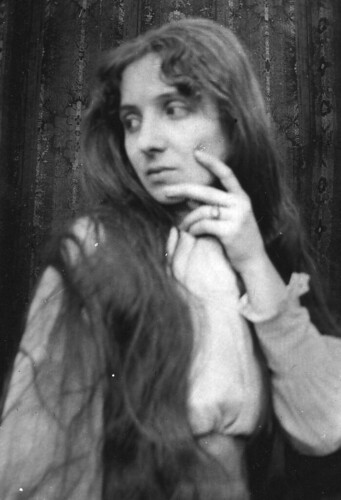
(Image from Biblioteca de Arte-Fundação Calouste Gulbenkian of Lucie de Souza Cardoso,
not necessarily a character portrayed in this story. Used for illustration purposes only.)

9

(Previous Part: 8)

You open the door, just as the man who called out earlier is again about to knock. He grimaces, staring you in the eye as if expecting you to speak. When you don't, his look turns from expectation to frustration. You find yourself growing somewhat concerned.

The man in front of you is an imposing force. He stands several inches taller than you, with layers of clothing covering his broad frame. His beard is neatly trimmed, but a coarse shadow has started to spread across his cheeks where the morning shave fails to hold through the night. Dark, leathery skin from years of working in the sun—his black eyes bear the weight of a man who has never had a moment to stop fighting.

Unexpectedly, he grabs you by the lapels of your wool coat, violently pulling you closer.

“Tell me what you saw this time, Aidan!”

  • If you answer, "How about you let go of me first?" Go to 10.
  • If you do something else, comments below and your story will continue as soon as possible.


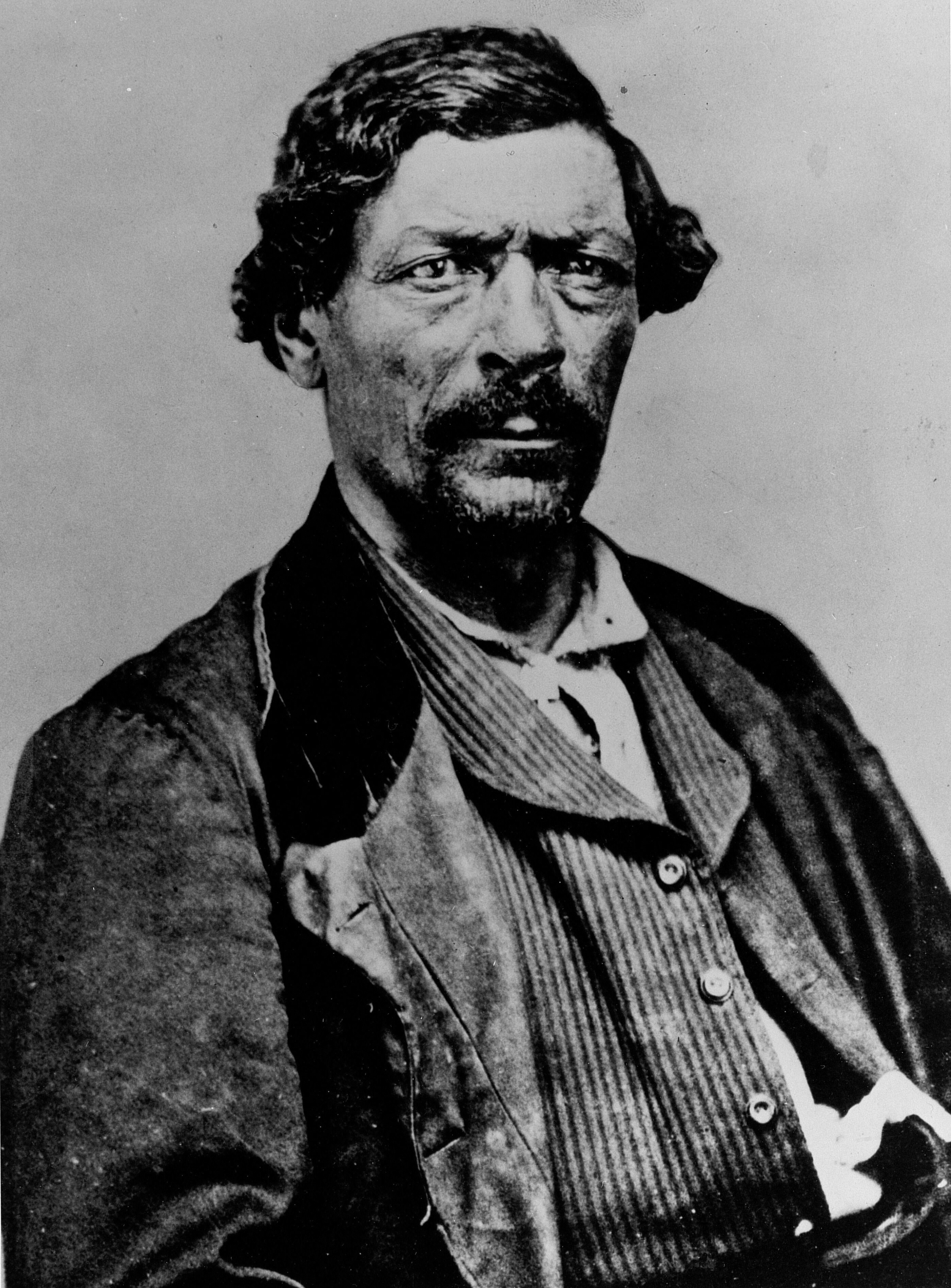
(Image from Wikimedia Commons of James Beckwourth, not necessarily a
character portrayed in this story. Used for illustration purposes only.)

8

(Previous Part: 4, 5, 6)

The cold night air chills your barely covered form, and you quickly find you want to cover yourself. On the chest of drawers that separates and splits the seat on the near side of the wagon, is a small stack of neatly folded clothing:

  • a long wool coat
  • a simple shirt
  • a pair of pants

On the floor below rests a pair of boots, worn but shined like new, and a small covered pot. You quickly pull on the clothing, which fits perfectly. If these aren't your clothes, someone is very familiar with your size. (Add these clothes to your equipment list.)

Suddenly, a forceful knocking strikes at the door.

“Are you awake yet?” The voice is deep and unfamiliar.

  • If you answer the door, go to 9.
  • If you do something else, comment below and your story will continue as soon as possible.

7

(Previous Part: 3)

You rolled a 20, and achieve a dramatic success. You may take 1 Hero Point, to be used at any time as a 1-point skill check modifier or to nullify a dramatic failure. OR, you may show an exemplary performance in the action you are currently taking.

  • If you would like the Hero Point, mark it on your character sheet and go to 6.
  • If you would like the performance upgrade, continue reading.

6

(Previous Part: 3)

Your skill check exceeded DC 10, and you have succeeded.

5

(Previous Post: 3)

Your skill check failed to exceed DC 10, and you have failed.

4

(Previous Part: 3)

You rolled a 1, and suffer a dramatic failure.

Gameplay: Using Skills

When taking an action, characters make use of Abilities and Skills to make a "skill check" to determine how well they do. This skill check involves a dice roll where the higher the result of the roll, the better the character does. Open Game Content (OGC) provides rules for making skill checks, but there are two additional House Rules to keep in mind when making such checks. These additional rules are not typical of OGC. For this reason, they will be noted below in the Using Skills discussion, and clearly marked as "House Rules" for use within The Lovecraftian Traveller.

Unless otherwise marked as "House Rules," the following material is Open Game Content, and is licensed for public use under the terms of the Open Game License v1.0a. The text may have been modified slightly from that of the System Reverence Document (v.3.5) or Modern System Reference Document.


USING SKILLS
To make a skill check, roll 1d20. The total of the die roll will then be added to the following:
  • Ability Modifier. Add the Ability Modifier for the Skill's key Ability (the Ability associated with the skill's use). The key Ability of each Skill is noted in its description.
  • Skill Level. Add the number of points in the Skill being used. Unless otherwised noted in the Skill description, a skill check can be performed even if the character has no rank in the applicable Skill--doing this is called making an "untrained skill check."
  • Miscellaneous Modifiers. Add any modifiers provided by other game mechanics (armor penalties, Feat bonuses, magical modifiers, etc.)

The sum of the numbers gathered in a skill check are then compared to the Difficulty Class (DC). The DC is provided by the GM, but generally follows the list below.

DIFFICULTY CLASS
0: Very easy
5: Easy
10: Average
15: Tough
20: Challenging
25: Formidable
30: Heroic
40: Nearly impossible

HOUSE RULES: DRAMATIC FAILURE
When a skill check is performed, any roll that fails to meet or exceed the DC is considered a failure. If, however, the d20 roll lands on a "1" (even if the character exceeds the DC with the use of modifiers) this is considered a dramatic failure. Such a failure may simply be amusing for skill checks between 0-15 DC, but could risk injury or death for skill checks between 20-40 DC.

HOUSE RULES: DRAMATIC SUCCESS
Any roll that succeeds to meet or exceed the DC, other than a dramatic failure, is considered a success. If, however, the d20 roll lands on a "20" (meaning the die itself lands on a "natural 20," or a 20 without the use of modifiers) this is considered a dramatic success. Such a success allows the character to show an exemplary performance in the action they are currently taking. Or, the player may take a "hero point." A hero point may be used at any time during the game to add a 1-point modifier to a skill check, or to nullify the effects of a dramatic failure.

Click here for more information on Rolling Skills

3

(Previous Part: 1, 2)

Slowly, you slip out of bed, finding it quite chilly as the blankets fall away. You quickly realize you're dressed only in your undergarments, but are determined to find some clue regarding your situation. Where are you? Who are the people outside? Are you in some sort of danger?

You move softly across the floor, not wanting to rock the wagon as you investigate. You carefully search through the contents of the shelves and inside the cupboard.

Perform a Search (INT) skill check with a DC of 10.

If you roll a 1, go to 4
If you fail the skill check, go to 5
If you succeed at the skill check, go to 6
If you roll a 20, go to 7

Gameplay: Ability Modifiers

The following material is Open Game Content, and is licensed for public use under the terms of the Open Game License v1.0a. The text may have been modified slightly from that of the System Reverence Document (v.3.5) or Modern System Reference Document.


Whenever you attempt an action that has some chance of failure, you roll a twenty-sided die (d20). To determine if your character succeeds at a task you do this:
  • Roll a d20.
  • Add any relevant modifiers.
  • Compare the result to a target number.

If the result equals or exceeds the target number, your character succeeds. If the result is lower than the target number, you fail.

Each Ability offers some sort of modifier to rolls dependent upon it. Below is a list for modifiers available at the beginning of gameplay. The modifier is the number you apply to the die roll when your character tries to do something related to that Ability. You also use the modifier with some numbers that aren’t die rolls. A positive modifier is called a "bonus," and a negative modifier is called a "penalty."

ABILITY MODIFIERS
(Levels 1 - 19)

Level 1: Modifier -5
Level 2-3: Modifier -4
Level 4-5: Modifier -3
Level 6-7: Modifier -2
Level 8-9: Modifier -1
Level 10-11: Modifier 0
Level 12-13: Modifier 1
Level 14-15: Modifier 2
Level 16-17: Modifier 3
Level 18-19: Modifier 4

Your Character: The Abilities

Each Ability partially describes your character and affects some of his or her actions.

The following material is Open Game Content, and is licensed for public use under the terms of the Open Game License v1.0a. The text may have been modified slightly from that of the System Reverence Document (v.3.5) or Modern System Reference Document.


STRENGTH (STR)
Strength measures your character’s muscle and physical power. This ability is especially important for characters who will be physically active, taking part in combat, or carrying large amounts of equipment.

You apply your character’s Strength modifier for:
  • Melee attack rolls.
  • Damage rolls when using a melee weapon or a thrown weapon (including a sling). (Exceptions: Off-hand attacks receive only one-half the character’s Strength bonus, while two-handed attacks receive one and a half times the Strength bonus. A Strength penalty, but not a bonus, applies to attacks made with a bow that is not a composite bow.)
  • Climb, Jump, and Swim checks. These are the skills that have Strength as their key ability.
  • Strength checks (for breaking down doors and the like).


DEXTERITY (DEX)
Dexterity measures hand-eye coordination, agility, reflexes, and balance. This ability is the most important one for rogues, but it’s also high on the list for characters who typically wear light or medium armor or no armor at all, and for anyone who wants to be a skilled archer.

You apply your character’s Dexterity modifier for:
  • Ranged attack rolls, including those for attacks made with bows, crossbows, and other ranged weapons.
  • Armor Class (AC), provided that the character can react to the attack.
  • Reflex saving throws, for avoiding attacks that you can escape by moving quickly.
  • Balance, Escape Artist, Hide, Move Silently, Open Lock, Ride, Sleight of Hand, Tumble, and Use Rope checks. These are the skills that have Dexterity as their key ability.


CONSTITUTION (CON)
Constitution represents your character’s health and stamina. A Constitution bonus increases a character’s hit points, so the ability is important for all classes.

You apply your character’s Constitution modifier for:
  • Each roll of a Hit Die (though a penalty can never drop a result below 1—that is, a character always gains at least 1 hit point each time he or she advances in level).
  • Fortitude saving throws, for resisting poison and similar threats.
  • Concentration checks. Concentration is a skill, important to spellcasters, that has Constitution as its key ability.

If a character’s Constitution score changes enough to alter his or her Constitution modifier, the character’s hit points also increase or decrease accordingly.


INTELLIGENCE (INT)
Intelligence determines how well your character learns and reasons. This ability is important for certain spell users because it affects how many spells can be cast, how hard their spells are to resist, and how powerful their spells can be. It’s also important for any character who wants to have a wide assortment of skills.

You apply your character’s Intelligence modifier for:
  • The number of languages your character knows at the start of the game.
  • The number of skill points gained each level. (But your character always gets at least 1 skill point per level.)
  • Appraise, Craft, Decipher Script, Disable Device, Forgery, Knowledge, Search, and Spellcraft checks. These are the skills that have Intelligence as their key ability.

Some spell users gains bonus spells based on her Intelligence score. The minimum Intelligence score needed to cast these spells is 10 + the spell’s level.

A character does not retroactively get additional skill points for previous levels if she increases her intelligence.


WISDOM (WIS)
Wisdom describes a character’s willpower, common sense, perception, and intuition. While Intelligence represents one’s ability to analyze information, Wisdom represents being in tune with and aware of one’s surroundings. If you want your character to have acute senses, put a high score in Wisdom. Every creature has a Wisdom score.

You apply your character’s Wisdom modifier for:
  • Will saving throws (for negating the effect of charm person and other spells).
  • Heal, Listen, Profession, Sense Motive, Spot, and Survival checks. These are the skills that have Wisdom as their key ability.

Some spell users get bonus spells based on their Wisdom scores. The minimum Wisdom score needed to cast these spells is 10 + the spell’s level.


CHARISMA (CHA)
Charisma measures a character’s force of personality, persuasiveness, personal magnetism, ability to lead, and physical attractiveness. This ability represents actual strength of personality, not merely how one is perceived by others in a social setting. Charisma is most important for paladins, sorcerers, and bards. It is also important for clerics, since it affects their ability to turn undead. Every creature has a Charisma score.

You apply your character’s Charisma modifier for:
  • Bluff, Diplomacy, Disguise, Gather Information, Handle Animal, Intimidate, Perform, and Use Magic Device checks. These are the skills that have Charisma as their key ability.
  • Checks that represent attempts to influence others.
  • Turning checks for attempting to turn undead.

Some spell users get bonus spells based on their Charisma scores. The minimum Charisma score needed to cast these spells is 10 + the spell’s level.

Character Creation: Ability Score Generation

Prior to taking an action that requires a roll, you need to determine your Ability Scores. Open Game Content provides rules for using character Abilities in game, but it does not provide rules for determining the character's Ability Score. For this reason, it is necessary to refer to a published document other than the System Reference Document or Modern System Reference Document to determine Ability Scores within The Lovecraftian Traveller. It is recommended that both the Dungeons and Dragons Player's Handbook and the d20 Modern Roleplaying Game be purchased to create a character in The Lovecraftian Traveller. Although any Open Game Content compatible core rulebook can be used (with GM approval), the methods used to determine a character's Abilities by the Player's Handbook and d20 Modern are considered appropriate for use with this game.

HOUSE RULES: FLAWS & THE ABILITY POOL
The following House Rules may be used to determine Ability Score in The Lovecraftian Traveller, and allows for the addition of character flaws at the beginning of the game. It should be noted, however, that these House Rules will create a weaker character than that developed through standard Ability Generation (as described in the Player's Handbook and d20 Modern).

The Ability Score for the average human is 10, without some sort of ability flaw, your character will start with 10 points in all abilities. Each of these scores can be increased (or, potentially, decreased) over the course of the game. When an Ability score changes, all attributes associated with that score change accordingly. During character creation, the initial Ability score can be modified.

If there are any Abilities you would like your character to have a flaw in, determine the specifics of the flaw, remove points from that Ability, and write the removed number removed down as your "Ability Pool." You are not allowed to add any points to flawed Abilities during character creation. For some flaws, the GM may determine additional points need to be removed from the Ability during character creation, and may limit the amount the Ability can be increased during game play. During character creation, you may not remove more than 9 points from any individual Ability. Consult with the GM before taking any flaw.

Next, roll 1d20 (one 20-sided die--feel free to use the Dice Roller in the Gameplay Links), and add the number rolled to your Ability Pool. The total number of points in this pool may now be distributed amongst any Abilities which do not have a flaw. Each Ability Pool point is equal to one point in the Ability you choose to apply it to. During character creation, you may not take more than 18 for any individual Ability as its total Ability score (starting points + character pool points). If all available points have been distributed, but additional points remain in your Ability Pool, the GM may offer an item(s) or story element equal to the value of the points. The value of the points relative to equipment and story elements is solely determined by the GM, and excess Ability Pool points are worthless after character creation is completed.

Click here to view your Abilities
Click here to view your Ability Modifiers

2

(Start the story from the beginning: go to 0)
(Previous Part: 0, 1)


You pull aside the yellowed sheet. The fabric is paper thin with age, and tears slightly around one of the nails that keeps it in place. The mattress sits above a larger living space—a wagon fit for a small family. Cedar rafters curve across the ceiling, grasping tightly to short sidewalls of the floor. The ceiling is lined with a patterned chenille stretched over the framing. Nailed clumsily to edges, and creasing uncomfortably at every corner, tears and worn spots revealed the canvas hidden underneath.


In the far left corner a small wooden crate clatters with sheets of metal scrap and wire below an angled cupboard. In the far right, a small wrought iron furnace rests comfortably, an vent stretching from its top through the ceiling of the wagon, surrounded by a shelf hiding all manner of tin goods. Between them, an ornately painted door stands raised almost a foot above the floor, closed to the unknown.

Padded seats line either side of the room, suggesting an area for storage beneath. A chest of drawers separates splits the seat to the left, a long wool coat, a simple shirt and pair of pants neatly folded on top of it. On the floor below rests a pair of boots, worn but shined like new, and a small covered pot.

  • If you look out the window, go to 1
  • If you choose to search through the wagon, first ensure you have determined your Ability Scores, then, go to 3
  • If you do something else, comment below and your story will continue as soon as possible.

(images from Journey Folki)

1

(Start the story from the beginning: go to 0)
(Previous Part: 0, 2)

You look through the cold wire mesh to the gray night outside. The moonlight does little to help you see, as it fights to push through the thick fog. There seems to be some sort of movement, the yellow-orange glow of dirty lamplight shifts somewhere out of sight, casting dim shadows across the ground. From the shape of the shadows, you would guess you're in some sort of wagon, high above the wet, uneven ground.


The shutters outside the window rattle a little in the wind. You hear footfalls across the ground as the voices grow louder. You struggle to hear, finding the cricket songs almost unbearable as they muffle the words of the people outside. You're almost certain it is only a matter of time before one of them enters the wagon.


  • If you look into the rest of the wagon, go to 2
  • If you choose to search through the wagon, first ensure you have determined your Ability Scores, then, go to 3
  • If you do something else, comment below and your story will continue as soon as possible.

(Creative Commons image by Vincepal)

0

You awake, eyes nearly glued together with the dry crust of sleep. Rubbing your eyelids helps to clear the rheumy ground, but makes you suddenly aware of the throbbing pain in your head.

The room shakes, and you realize it's not your own. As the movement calms to a gentle rocking, a tinny chiming can be heard in the room beyond. Your hands slide across the soft, worn fabric of an old quilt—a sharp contrast to the hay filled mattress below you. The ceiling is only a few feet above your head, covered by a yellowed sheet with mold-like floral pattern you can barely make out in the moonlight. The sheet falls to one side of the mattress, hiding the rest of the room like a thin veil. On the other side of the mattress, a window is carved from the thin, wooden wall, covered only by an uneven wire mesh.

The cool breeze of night flows through the window, bringing with it the fresh scent of rain. The sound of wagon wheels crawling across the damp ground almost masks the crickets singing in the distance. There are voices outside, low and whispered, speaking in an unfamiliar tongue. Unfamiliar, but somehow comforting.

You turn your head slightly, and the scent of the room becomes apparent: stale, like dirt and neglected old books—a library in a desert. But, there was something else. Something almost unnoticeable. Something just below the surface. The malodorous air of salt and fetid meat. For a moment you feel a sickness burning at the back of your throat, but your attention is quickly taken from the moment as the room lurches forward, and shakes softly to a stop.

  • If you look out the window, go to 1
  • If you look past the sheet, go to 2
  • If you do something else, comment below and your story will continue as soon as possible.